Bridges in Agoura Hills
Maybe you lost a back tooth to a deep crack a few months ago, and now chewing feels lopsided and the neighboring teeth seem to be leaning into the gap. Or perhaps a front tooth was removed years ago and you've been smiling with your lips closed ever since. These are the moments when many of our Agoura Hills patients start asking about a dental bridge. At 805 Dentistry, our Thousand Oaks office helps families from Agoura Hills and the surrounding communities restore missing teeth in a way that looks natural and works comfortably every day.
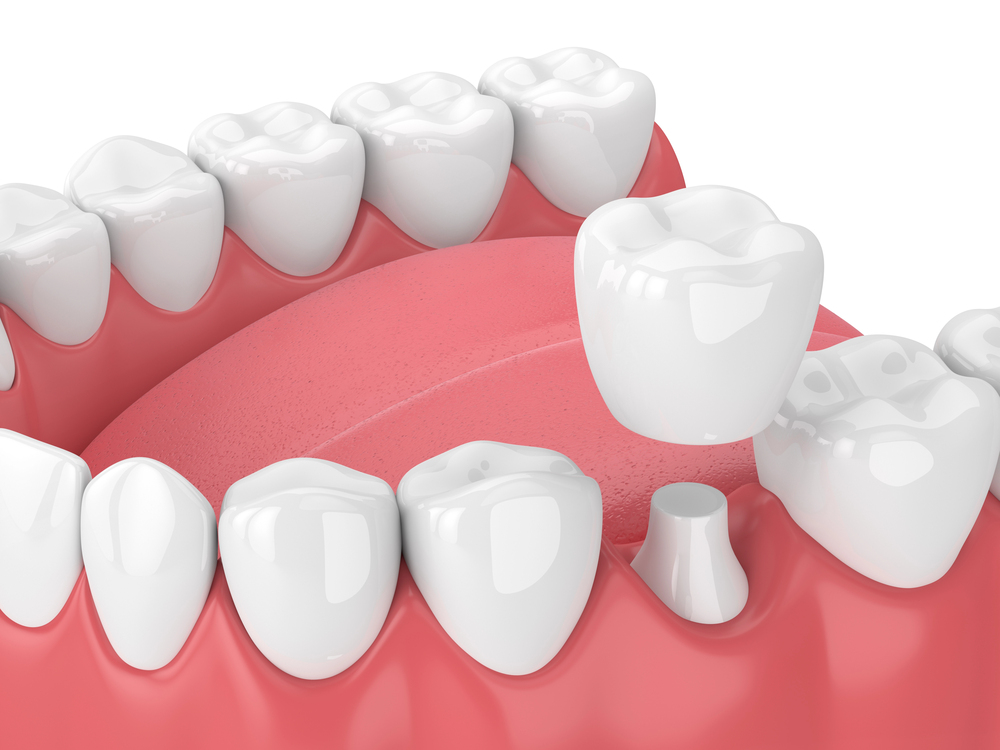
A dental bridge is a fixed restoration that "bridges" the space left by one or more missing teeth. In a traditional bridge, a replacement tooth, called a pontic, is held in place by crowns that fit over the healthy teeth on either side of the gap. Those supporting teeth are called abutments. Because the bridge is cemented in place, you don't take it out at night the way you would a removable partial denture.
When the neighboring teeth aren't strong enough to support a bridge, or when several teeth in a row are missing, an implant-supported bridge may be a better fit. Instead of relying on natural teeth, the bridge attaches to dental implants placed in the jaw. We offer both approaches, as well as single implants and partial dentures. That means we can talk through every realistic option with you rather than steering you toward just one.
A gap in your smile affects more than appearance. Over time, the teeth around an empty space can drift, your bite can shift, and you may start favoring one side of your mouth when you chew. A well-designed bridge fills that space and helps keep the surrounding teeth where they belong.
Patients from Agoura Hills often tell us they're looking for a restoration that feels like part of their own smile. Here are some of the practical advantages a bridge can offer:
- A fixed replacement that stays in place while you eat, talk, and laugh
- A more balanced bite and more comfortable chewing on both sides
- Support that helps prevent neighboring teeth from shifting into the gap
- A natural-looking result shaded to blend with your surrounding teeth
- A restoration made with help from our on-site dental lab, which lets us coordinate details closely
Am I a good candidate for a dental bridge?
You may be a good candidate if you're missing one or more adjacent teeth and have healthy teeth or adequate bone near the gap to support the restoration. The best way to know for sure is a thorough exam. During your visit, we look at the health of the abutment teeth, your gums, and your bite. We may use 2D or 3D imaging, including CBCT, to get a clearer picture of the bone and surrounding structures.
Healthy gums matter, too. If we find signs of gum disease, we'll address it first with treatments such as scaling and root planing, since a bridge needs a stable foundation. Our team includes a board-certified periodontist, which is especially helpful when gum health or implant placement is part of the plan. If you feel nervous about dental work, we also offer nitrous oxide, oral sedation, and IV sedation, so anxiety doesn't have to keep you from moving forward.
What happens during the bridge process, and how do I care for it?
For a traditional bridge, the process typically begins by preparing the abutment teeth so the crowns can fit over them. Next, we take impressions or records of your teeth so the bridge can be custom made, and we may place a temporary bridge to protect the area in the meantime. Once your final bridge is ready, Dr. Dar Radfar checks the fit, color, and bite before cementing it in place. Implant-supported bridges involve additional steps, since the implants need to be placed and allowed to integrate before the final bridge is attached.
Caring for a bridge is similar to caring for natural teeth, with one important addition: cleaning underneath the pontic, where food and plaque can collect. We'll show you how to use floss threaders or other tools to keep that area clean. Brushing twice a day, flossing daily, and keeping up with regular exams and cleanings all help protect both the bridge and the teeth supporting it. If you grind your teeth at night, we may recommend a night guard.
How can I pay for my bridge?
We accept all major PPO insurance plans, and our team can help you understand how your coverage applies to your treatment. If you don't have insurance, we welcome self-pay patients, and we'll walk you through the costs before any work begins.
Financing is also available for patients who would like to spread payments out over time. Our goal is for Agoura Hills families to make decisions based on what's right for their smile, with a clear picture of the costs. Because we care for children and adults alike, many households find it convenient to bring the whole family to one office. If you're ready to explore whether a dental bridge is right for you, our team is happy to help you schedule a visit.