Bridges in Oak Park
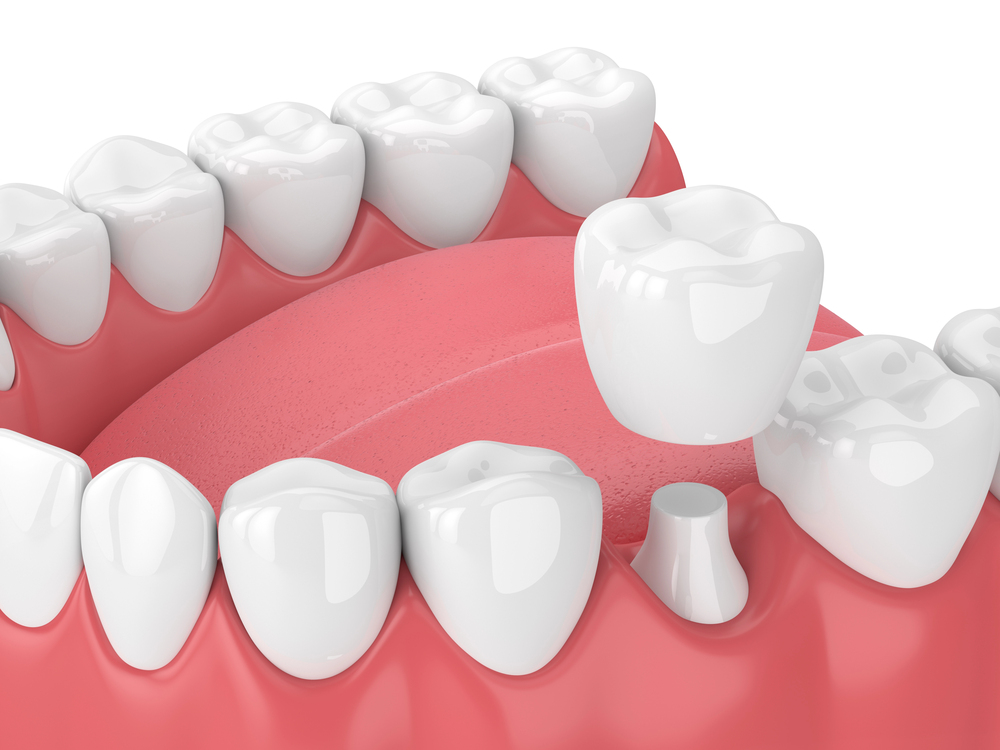
A missing tooth rarely stays a simple gap. Over time, the teeth on either side can begin to drift toward the open space, and the tooth above or below can shift out of position as well. A dental bridge fills that space with a replacement tooth anchored to its neighbors. That restores your bite and keeps your smile looking complete. At 805 Dentistry, our Thousand Oaks office regularly welcomes patients from Oak Park who want a dependable, natural-looking way to replace one or more missing teeth.
A bridge is a fixed restoration, meaning you don't take it out at night the way you would a partial denture. A traditional bridge uses crowns placed on the healthy teeth beside the gap. Those anchor teeth support an artificial tooth, called a pontic, that sits where the missing tooth used to be. The finished piece is cemented in place and functions as a single unit when you chew and speak.
We also offer implant-supported bridges, which rest on dental implants instead of natural teeth. This option can work well when several teeth in a row are missing, or when the neighboring teeth are healthy and we'd prefer not to reshape them. Our team includes a board-certified periodontist who places dental implants. That means Oak Park patients can explore both approaches with us rather than being sent elsewhere.
Patients come to us for bridges for a range of reasons. Some have lost a tooth to decay or an old injury and have lived with the gap for years. Others recently had a tooth extracted and want to plan the replacement before neighboring teeth begin to shift. Still others are replacing an older bridge that has worn down or no longer fits well.
Whatever brings you in, a bridge offers several practical advantages:
- It fills the gap with a fixed tooth you don't remove for cleaning.
- It helps keep surrounding teeth from drifting out of alignment.
- It restores chewing on that side of your mouth.
- It's color-matched to blend with your natural teeth.
- It can be supported by your own teeth or by implants, depending on your needs.
Am I a good candidate for a bridge?
You may be a good candidate if you're missing one or more teeth and have healthy teeth or adequate support on either side of the space. During your exam, we look at the condition of the potential anchor teeth, the health of your gums, and how your upper and lower teeth come together. If gum disease is present, we can treat it first, because healthy gums are an important foundation for any restoration.
When the teeth next to the gap already have large fillings or need crowns anyway, a traditional bridge can make particularly good sense. If those teeth are healthy and untouched, or if bone support is a concern, we may talk with you about implants, bone grafting, or a partial denture instead. We'll explain the options that fit your mouth so you can choose with confidence.
What happens during the bridge process?
The process typically starts with an exam and imaging, followed by preparation of the anchor teeth and impressions for your custom bridge. We offer 2D and 3D dental imaging, including CBCT, which helps us evaluate the teeth and bone involved, especially when implants are part of the plan.
For a traditional bridge, we gently reshape the anchor teeth so the crowns can fit over them. Then we take impressions to create your restoration, and you'll wear a temporary bridge in the meantime. Because we have an on-site dental lab, we can coordinate the fabrication of your bridge closely with our own team. Once it's ready, we check the fit, bite, and color before cementing it in place. If you feel nervous about dental work, we offer nitrous oxide, oral sedation, and IV sedation to help you stay comfortable.
How do I care for my new bridge?
You care for a bridge much like your natural teeth, with daily brushing, careful cleaning under the replacement tooth, and regular checkups. The area beneath the pontic can collect food and plaque, so we'll show you how to clean it effectively at home.
Routine cleanings and exams let us keep an eye on the anchor teeth and gums that support your bridge. If you have an implant-supported bridge, our periodontal team also provides implant maintenance. For Oak Park families, it's convenient that we see children and adults of all ages, so several family members can often be cared for in one office.
How can I pay for a dental bridge?
We accept all major PPO insurance plans, and we welcome self-pay patients as well. Coverage for bridges varies from plan to plan, so our team can help you understand how your benefits apply before treatment begins.
Financing is also available, which allows you to move forward with replacing a missing tooth without waiting. If you live in Oak Park and are ready to talk about a bridge, contact 805 Dentistry to schedule an exam with Dr. Dar Radfar and our team.