Implant-Supported Bridges in Woodland Hills
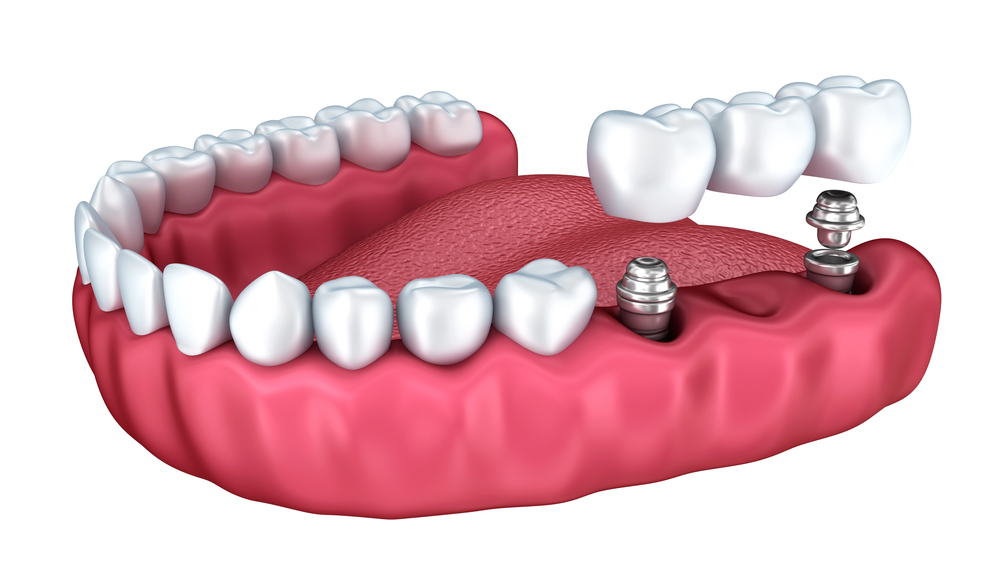
If you're missing two or more teeth in a row, you've probably noticed how it affects chewing, speaking, and confidence when you smile. An implant-supported bridge is one of the ways we replace several neighboring teeth at once, anchoring the new teeth to dental implants instead of relying on your natural teeth for support. At 805 Dentistry, we help patients from Woodland Hills and across the surrounding communities plan this treatment from the first scan to the final bridge.
An implant-supported bridge is a row of connected replacement teeth held in place by dental implants placed in the jawbone. Instead of placing one implant for every missing tooth, we typically place implants at strategic points, and the bridge spans the gap between them. For example, a patient missing three adjacent teeth may be a good fit for a bridge supported by two implants, one at each end.
This differs from a traditional bridge, which is cemented onto crowns placed over the healthy teeth on either side of the gap. Those neighboring teeth have to be reshaped to hold the bridge. With an implant-supported bridge, the implants do the work, so your remaining natural teeth can stay as they are. For many Woodland Hills patients weighing their options, that difference is a major reason to choose this approach.
Many of our Woodland Hills patients choose implant-supported bridges because the bridge is fixed in place and does not come out the way a removable partial denture does. Patients can clean it as part of their daily routine and don't have to take it out at night.
Key advantages include:
- A fixed restoration that stays in place while you eat and speak
- No need to reshape healthy neighboring teeth for support
- Fewer implants needed than replacing each missing tooth individually
- A natural-looking result designed around your bite and smile
- Implants placed in the jawbone, where tooth roots once were
Because our office offers dental implants, bridges, partial dentures, and implant-supported dentures, we can compare these options side by side during your consultation and recommend the one that fits your mouth, goals, and budget.
Am I a good candidate for an implant-supported bridge?
You may be a good candidate if you are missing several teeth in a row and have enough healthy jawbone and gum tissue to support implants. We confirm this with a thorough exam and imaging before recommending treatment.
Our office provides CBCT imaging, which gives us a 3D view of your jawbone and nearby structures, and we have a board-certified oral and maxillofacial radiologist on staff. If the bone in an area has thinned after tooth loss, that doesn't automatically rule you out. We offer bone grafting, and sinus lift surgery for certain upper back teeth, to help build a stronger foundation for implants. If gum disease is present, our periodontal team can treat it first, since healthy gums matter for implant success.
What does the implant-supported bridge process involve?
The process happens in stages: planning, implant placement, healing, and placing your final bridge. Your timeline depends on your individual needs, including whether you need extractions or grafting first.
It starts with a consultation, exam, and imaging so we can map out where implants should go. Our team includes a board-certified periodontist who places dental implants. Once the implants are placed, they need time to bond with the jawbone before they can support a bridge. When you're ready, we take the measurements needed for your custom bridge. Our on-site dental lab supports this restorative work, which helps keep fabrication closely coordinated with your care. Finally, we attach the bridge to the implants and check your bite.
If you feel anxious about dental procedures, we can help. We offer nitrous oxide, oral sedation, IV sedation, and general anesthesia, and we have a board-certified dental anesthesiologist on staff.
How do I care for an implant-supported bridge?
You care for an implant-supported bridge much like natural teeth: brush twice a day, clean around the implants and under the bridge daily, and keep up with regular dental visits. Food and plaque can collect beneath the bridge, so we'll show you how to clean those areas properly.
Ongoing professional care matters too. Our periodontal team provides implant maintenance and periodontal maintenance, which help us monitor the gums and bone around your implants over time. If you grind your teeth, we may recommend a night guard to help protect your restoration. Woodland Hills patients can schedule their routine cleanings and exams with us as well, so all of their care stays in one office.
How can I pay for an implant-supported bridge?
We accept all major PPO insurance plans, welcome self-pay patients, and offer financing. Coverage for implant treatment varies from plan to plan, so we'll review your benefits with you before treatment begins.
Once we've built your treatment plan, we'll walk you through the costs for each stage, including any preliminary procedures such as extractions or bone grafting. If you'd like to spread payments out over time, ask our team about financing options. If you live in Woodland Hills and are ready to replace missing teeth with a fixed, stable solution, contact 805 Dentistry to schedule your consultation with our team.