Bridges in Calabasas
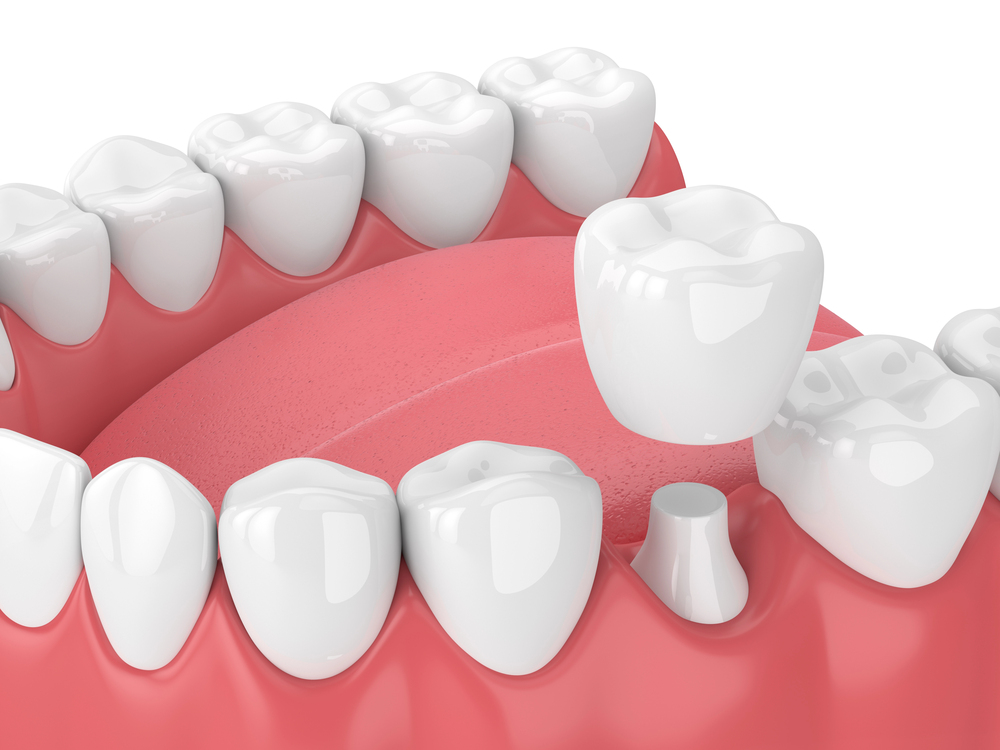
A missing tooth affects more than your smile. The teeth on either side can begin to drift into the gap, your bite can shift, and chewing on that side may start to feel awkward. A dental bridge fills that space by anchoring a replacement tooth to the teeth or implants around it. At 805 Dentistry, our Thousand Oaks office regularly helps Calabasas patients restore missing teeth with bridges, and we handle each stage under one roof.
A traditional bridge is a single connected restoration made up of two or more crowns and one or more artificial teeth, called pontics, between them. The crowns fit over the natural teeth on each side of the gap, and the pontic sits where the missing tooth used to be. Because the pieces are joined, the bridge is cemented in place and stays put. It does not come out the way a partial denture does.
When the neighboring teeth are healthy and we prefer not to reshape them, or when several teeth in a row are missing, an implant-supported bridge may be the better choice. In that case, dental implants serve as the anchors instead of natural teeth. Our team includes a board-certified periodontist who places dental implants and provides implant maintenance. That means Calabasas patients exploring this option can have their care coordinated within our practice rather than being sent elsewhere.
Bridges work well for adults who have lost one or more adjacent teeth to decay, injury, or extraction, as long as there is solid support on either side of the gap. Some patients come to us right after losing a tooth. Others have lived with a gap for years and are now noticing that nearby teeth have tilted or that chewing has become uneven. Both situations are worth evaluating.
Not every patient is ready for a bridge right away. If gum disease is present, we treat it first, using services such as scaling and root planing, because healthy gums help support any restoration. If an implant-supported bridge is planned and the jawbone needs more volume, bone grafting may come first. We also compare bridges with the other tooth replacement options we offer, including implants and partial dentures, so you can choose the approach that fits your mouth, goals, and budget.
What happens during the bridge process?
For a traditional bridge, the process usually takes a few visits: an exam and planning appointment, a preparation visit, and a final placement visit. At the first appointment, we examine the area and take imaging. Our office offers 2D and 3D dental imaging, including CBCT, which helps us evaluate the supporting teeth and bone before we recommend a plan.
At the preparation visit, we reshape the anchor teeth so the crowns can fit over them. We then capture the details needed to fabricate your bridge. Because we have an on-site dental lab, much of that work happens close to the chair, which makes it easier to fine-tune shade, shape, and fit. You will leave with a temporary restoration to protect the area. At the final visit, we check your bite, make any adjustments, and cement the permanent bridge.
Here is what you can expect along the way:
- A clear explanation of your options before any treatment begins
- Local anesthetic to keep you comfortable during preparation
- Sedation options for anxious patients, including nitrous oxide, oral sedation, and IV sedation
- Bite checks and adjustments before your bridge is finalized
How do I care for my bridge?
Care for your bridge much like your natural teeth, with one added step: cleaning underneath the pontic. Food and plaque can collect in the space between the artificial tooth and your gums, so we will show you how to use floss threaders or other tools to keep that area clean. Brushing twice a day and flossing daily also protect the anchor teeth, which still need care to stay healthy.
Regular cleanings and exams let us check the bridge, the supporting teeth, and your gums over time. If you grind your teeth at night, we may recommend a night guard to reduce stress on your restoration. If something feels loose or a bridge is damaged, call us. Our office offers emergency dental appointments.
How can I pay for a dental bridge?
We accept all major PPO insurance plans, and many plans include some coverage for bridges as a restorative treatment. Our team can review your benefits with you before treatment begins so you know what to expect.
We also welcome self-pay patients, and financing is available for those who would like to spread out the cost. Led by Dr. Dar Radfar, DDS, our family practice serves Calabasas and the surrounding communities, offering dental care for children and adults in one convenient place. When you are ready to talk about closing a gap in your smile, give us a call to schedule a consultation.