Bridges in Camarillo
A missing tooth affects more than your smile. The gap can make chewing on one side awkward, change how you speak, and allow neighboring teeth to drift out of position over time. A dental bridge is one of the most dependable ways we close that gap, and for Camarillo patients, our Thousand Oaks office brings the planning, crafting, and fitting of a bridge under one roof. At 805 Dentistry, Dr. Dar Radfar and our team see children and adults of all ages, so the same practice that cares for your family's checkups can also restore your missing teeth.
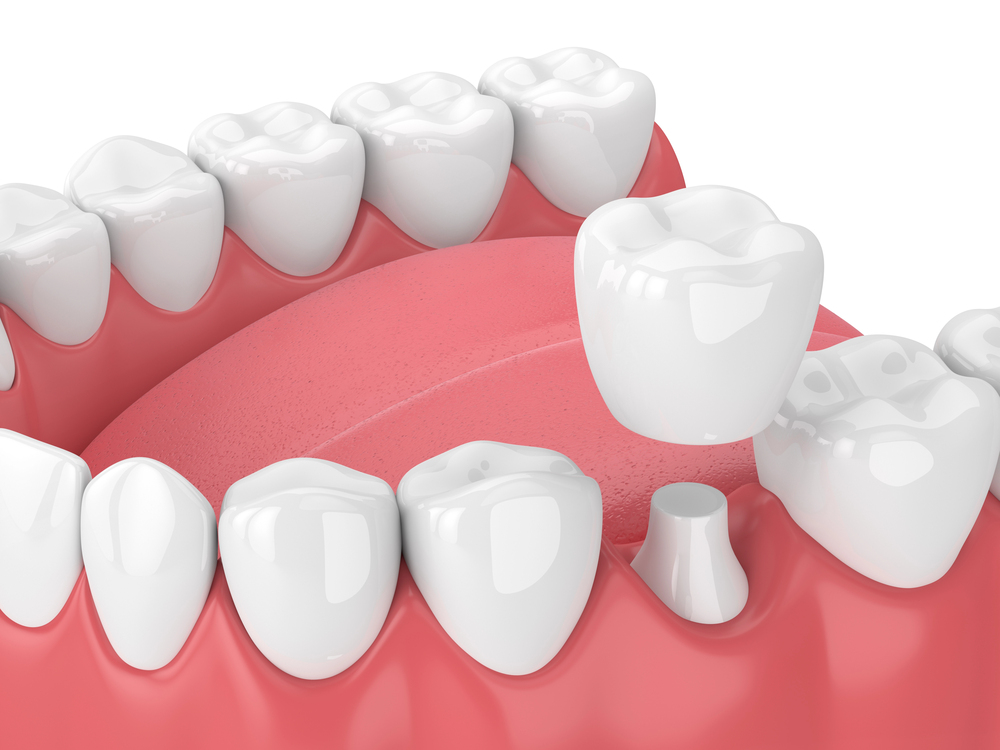
A bridge is a fixed restoration that "bridges" the space left by one or more missing teeth. In a traditional bridge, a replacement tooth, called a pontic, is held in place by crowns that fit over the healthy teeth on either side of the gap. Once it's cemented, the bridge stays in your mouth. You don't take it out at night the way you would a partial denture.
We also offer implant-supported bridges, which are anchored to dental implants instead of natural teeth. This can be a good option when the teeth next to the gap are healthy and you'd rather not reshape them, or when several teeth in a row are missing. Because our practice includes a board-certified periodontist who places dental implants, we can discuss both approaches with you and help you choose the one that fits your mouth and your goals.
Many of the Camarillo families we serve appreciate having general, cosmetic, and specialty care in one practice. We describe ourselves as a one-stop shop for the whole family's dental needs, which matters when a bridge is part of a bigger plan. If a tooth needs to be removed first, if your gums need attention, or if bone grafting would help support an implant, those services are available within our office rather than at a series of separate locations.
Our on-site dental lab is another advantage. Having the lab in-house lets our clinical team and lab work closely together on the shape, shade, and fit of your restoration. For patients who feel anxious about dental work, our board-certified dental anesthesiologist offers nitrous oxide, oral sedation, IV sedation, and general anesthesia, so you can choose the level of comfort that's right for you.
Am I a good candidate for a dental bridge?
You may be a good candidate if you're missing one or more adjacent teeth and have healthy teeth or adequate support on either side of the gap. During your exam, we look closely at the condition of the surrounding teeth, your gum health, and your bite to decide which type of bridge will hold up best.
Bridges can help in a range of situations, such as a tooth lost to decay or injury, a tooth that couldn't be saved after a crack, or a gap left after an extraction. If gum disease is present, we'll typically address it first, because healthy gums form the foundation for any lasting restoration. When a bridge isn't the best fit, we can walk you through other tooth replacement options we offer, including dental implants and partial dentures.
What happens during the bridge process, and how do I care for it?
For a traditional bridge, the process usually takes a few visits. Here's what you can generally expect:
- Consultation and exam: We evaluate the gap, the neighboring teeth, and your overall oral health, often using digital imaging.
- Preparing the supporting teeth: We gently reshape the anchor teeth so the crowns can fit over them comfortably.
- Impressions and a temporary: We capture the details of your bite and place a temporary bridge to protect your teeth while the final restoration is crafted.
- Final fitting: We check the fit, color, and bite of your permanent bridge, make any adjustments, and cement it in place.
Implant-supported bridges follow a longer timeline because the implants need to be placed and allowed to heal before the bridge is attached. We'll outline every step in advance so you know what's ahead.
Aftercare is straightforward but important. Brush twice a day, and clean beneath the pontic daily with a floss threader or similar tool, since food can collect under the replacement tooth. Regular cleanings and exams let us monitor the bridge, the supporting teeth, and your gums. If you grind your teeth at night, ask us about a night guard to help protect your restoration.
How can I pay for a dental bridge?
We accept all major PPO insurance plans, and our team can help you understand how your coverage applies to a bridge before treatment begins. We also welcome self-pay patients.
Because every bridge is planned around your individual needs, costs vary from patient to patient. We'll review your treatment plan and estimated costs with you openly during your consultation. Financing is available for Camarillo patients who would like to spread the cost of treatment over time, so you can restore your smile without putting it off. Reach out to our office to schedule a visit and find out whether a bridge is the right choice for you.