Implant-Supported Bridges in Newbury Park
When two or more teeth in a row are missing, the gap affects more than your smile. Chewing shifts to the other side, neighboring teeth can drift, and a traditional bridge would mean filing down healthy teeth to anchor it. An implant-supported bridge takes a different approach: dental implants placed in the jaw hold a custom bridge, so the replacement teeth stand on their own foundation. At 805 Dentistry, we help patients from Newbury Park and across the Conejo Valley replace several missing teeth this way, with planning, surgery, and restoration coordinated under one roof at our Thousand Oaks office.
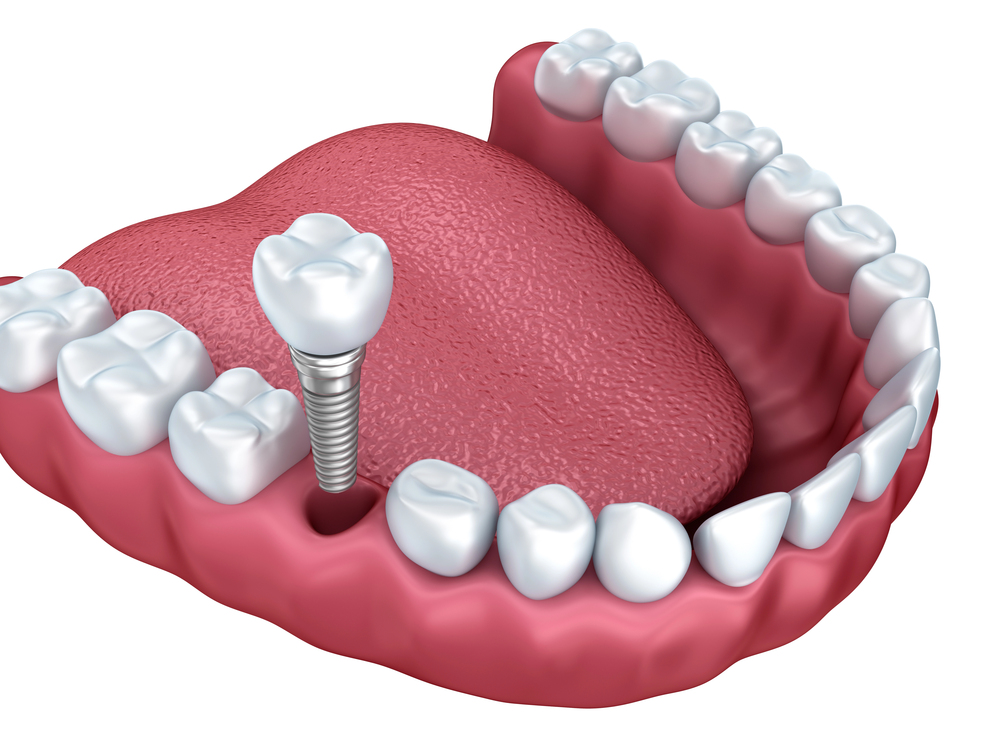
An implant-supported bridge is a fixed row of replacement teeth anchored to dental implants rather than to your natural teeth. Typically, implants are placed at strategic points along the gap, and a bridge spanning the missing teeth is attached to them. You don't remove it at night the way you would a partial denture. It stays in place for eating, speaking, and smiling.
This option fits a range of situations. Some patients have lost several adjacent back teeth to decay or old failed restorations. Others are missing front teeth after an injury, or have a long-standing gap where a partial denture never felt secure. Because the implants carry the load, the healthy teeth on either side of the space are left untouched. Implants also stimulate the jawbone where tooth roots used to be, which a conventional bridge cannot do.
Your first visit begins with a thorough exam and imaging. We offer CBCT imaging and 2D and 3D dental imaging, which let us see bone height, bone density, and the position of nerves and sinuses in detail. Our team includes a board-certified oral and maxillofacial radiologist, so these scans are read carefully before any plan is made.
From there, we discuss whether you're a good candidate. Healthy gums and enough bone to support implants are key. If gum disease is present, we treat it first through gum disease treatment, scaling and root planing, or periodontal care. If bone has thinned since your teeth were lost, bone grafting or sinus lift surgery may be recommended to rebuild the foundation. We'll walk you through your options so you know exactly what your path looks like.
What happens during implant-supported bridge treatment?
Treatment happens in stages, beginning with implant placement and ending with your permanent bridge. Our board-certified periodontist places dental implants, bringing specialized training in the gum and bone tissues that support them. After placement, the implants need time to integrate with the jawbone before they're ready to support the final bridge.
Once healing is complete, we take impressions and design your bridge. Our on-site dental lab allows close coordination between the clinical team and the restoration process, helping fine-tune fit, shape, and shade. Patients who feel nervous about surgery have options too. Our board-certified dental anesthesiologist provides nitrous oxide, oral sedation, IV sedation, and general anesthesia.
What to expect along the way:
- A consultation with an exam and 3D imaging
- Any preparatory care needed, such as gum treatment or bone grafting
- Implant placement, with sedation available if you need it
- A healing period while the implants bond with the bone
- Fitting and adjustment of your custom bridge
How do I care for an implant-supported bridge?
You care for an implant-supported bridge with daily brushing, careful cleaning around and under the bridge, and regular professional visits. Although implants can't develop cavities, the gums and bone around them can become inflamed if plaque builds up, so thorough home care matters.
We'll show you how to clean beneath the bridge and around each implant. We also provide implant maintenance and periodontal maintenance to monitor the health of the tissues supporting your restoration. If you grind your teeth, a night mouth guard may help protect your bridge. Routine exams and cleanings keep the rest of your smile healthy too, and our family practice can see everyone in your household.
How can Newbury Park patients pay for implant-supported bridges?
We make paying for treatment as straightforward as possible. We accept all major PPO insurance plans, welcome self-pay patients, and offer financing to help spread the cost of care over time.
Because each bridge is planned around your mouth, the cost depends on how many implants are needed and whether preparatory procedures like bone grafting are part of your plan. We review your treatment plan and estimated costs with you before we begin, so you can make a decision with confidence. For Newbury Park families, having imaging, gum care, implant placement, sedation, and restoration available through one practice means fewer separate offices to coordinate. If you're ready to replace missing teeth with a secure, fixed solution, contact our team to schedule a consultation.