Inlays in Westlake Village
A chipped edge on a back molar, an old silver filling that's started to crack, or a cavity that turns out larger than expected: these are the moments when many of our Westlake Village patients first hear the word inlay. The damage is too extensive for a simple filling to hold up well, but most of the tooth is still strong enough that a full crown would remove more structure than necessary. An inlay fills that middle ground, and at 805 Dentistry in Thousand Oaks, we place them as part of the everyday restorative care we provide for families throughout the area.
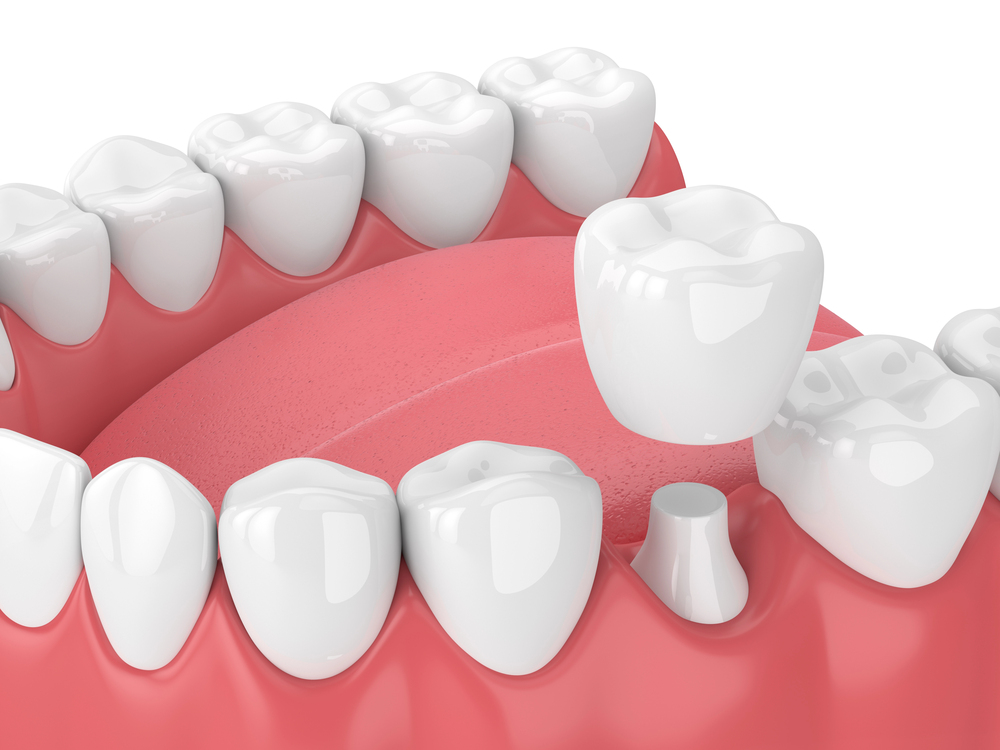
An inlay is a custom-made restoration that fits into the chewing surface of a tooth, specifically within the cusps, the raised points on top of your back teeth. Unlike a traditional filling, which is shaped and hardened directly in your mouth, an inlay is crafted outside the mouth to match the precise contours of the prepared area and then bonded into place. Think of it as a solid, precisely shaped piece set into the tooth rather than material packed in layer by layer.
Because an inlay is made as a single piece, it can be a strong, well-fitting option for molars and premolars that handle heavy chewing forces. We also offer onlays, which extend over one or more cusps when the damage reaches further. During your exam, Dr. Dar Radfar will look at where the decay or fracture sits and recommend whichever option preserves the most healthy tooth while restoring it properly.
Patients from Westlake Village often tell us they want care that's thorough without sending them to multiple offices. That's a core part of how we work. We describe ourselves as a one-stop shop for the whole family's dental care, so the same team that handles your cleanings and exams can also plan and place your inlay.
We see children and adults of all ages, which lets parents coordinate appointments for several family members in one place. Our office also has an on-site dental lab, keeping communication between our clinical team and the lab close as restorative work moves forward. If something unexpected happens, like a filling breaking on a weekend hike, we offer emergency dental appointments to help get you seen.
Am I a good candidate for an inlay?
You may be a good candidate if you have moderate decay or damage on a back tooth that's confined to the area between the cusps. Inlays are often considered in situations like these:
- Replacing an older filling that has worn down, cracked, or begun to leak
- Treating a cavity that's too large for a filling to support reliably
- Repairing a tooth with a small fracture that hasn't reached the cusps
- Restoring a tooth where you'd prefer to keep more natural structure than a crown allows
If the damage extends over the cusps, an onlay or crown may be a better fit. When a crack runs deeper, our practice also includes endodontic care, including treatment for cracked teeth, so we can evaluate the full picture before recommending a restoration.
What happens during the inlay process?
The process usually takes two visits. At the first appointment, we numb the area, remove decay or the old filling, and shape the tooth so the inlay will fit securely. We then capture the details of the prepared tooth so the restoration can be made to match, and we place a temporary to protect it in the meantime.
At the second visit, we remove the temporary, check the fit and bite of your new inlay, and bond it into place. We make small adjustments so it feels natural when you chew. For patients who feel nervous about dental work, we offer sedation options including nitrous oxide, oral sedation, and IV sedation, and our team includes a board-certified dental anesthesiologist.
How do I care for my inlay afterward?
You care for an inlay much like your natural teeth: brush twice a day, floss daily, and keep up with regular checkups. Some mild sensitivity in the first few days can be normal, and while you have a temporary in place, it helps to avoid very sticky or hard foods on that side.
Regular dental cleanings and exams let us check the margins of your inlay and catch any new concerns early. If you clench or grind your teeth, ask us about a night mouth guard to help protect your restorations. Because we also treat TMJ disorders, we can look at whether jaw issues are contributing to wear.
How can I pay for an inlay?
We accept all major PPO insurance plans and will help you understand how your coverage applies to restorative treatment. We also welcome self-pay patients.
For those who'd like to spread out the cost, financing is available. Our team is happy to review your options before treatment begins, so Westlake Village families can make decisions with clear information and plan their care in a way that works for them.