Bridges in Woodland Hills
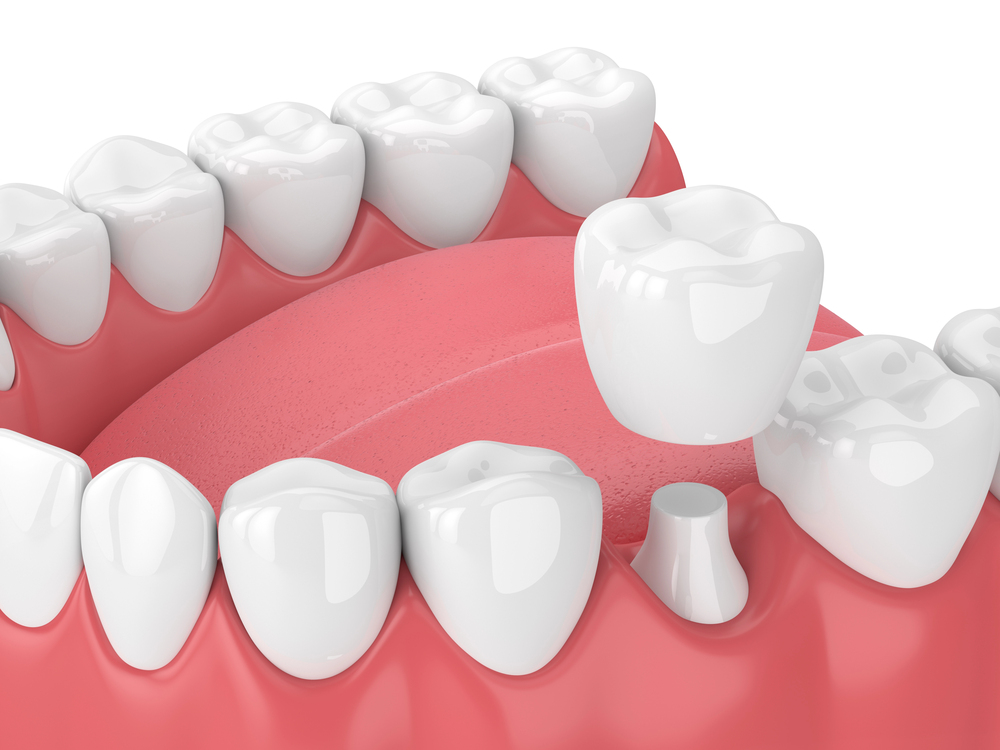
A missing tooth affects more than your smile. The teeth on either side can gradually drift into the gap, the tooth above or below it may shift, and chewing can start to feel uneven. A dental bridge fills that space with a replacement tooth anchored to the teeth or implants beside it, so your bite works as a complete set again. At 805 Dentistry in Thousand Oaks, we place bridges for patients throughout the Conejo Valley and the West San Fernando Valley, including many families from Woodland Hills.
A traditional bridge has three main parts. Two abutments are crowns placed over the natural teeth on either side of the gap, and a pontic is the artificial tooth suspended between them. The pieces are joined into one restoration and cemented in place, so you don't remove the bridge the way you would a partial denture.
When the neighboring teeth aren't the best anchors, or when several teeth in a row are missing, we may recommend an implant-supported bridge instead. Dental implants act as the anchors, which leaves the surrounding natural teeth untouched. Our team includes a board-certified periodontist who places implants, so Woodland Hills patients can explore both approaches in one office without being sent elsewhere.
Patients come to us for bridges for several reasons. Some have lost a tooth to decay or injury and want a fixed replacement. Others have a tooth that can't be saved and needs extraction. Some have worn an older bridge for years and need it replaced. Each situation calls for a slightly different plan, and we walk through the options with you before recommending one.
A bridge can help you:
- Restore a natural-looking smile where a gap is visible
- Chew more evenly on both sides of your mouth
- Keep neighboring teeth from drifting into the open space
- Avoid a removable appliance that has to come out at night
Because we offer general, restorative, and specialty care under one roof, we can also handle related needs, such as gum treatment, a root canal on an anchor tooth, or bone grafting before an implant. That saves you from coordinating appointments across several offices.
Am I a good candidate for a dental bridge?
You may be a good candidate if you're missing one or more adjacent teeth and have healthy teeth or enough bone on either side of the gap to support the restoration. We confirm candidacy with an exam and imaging. Our office provides 2D and 3D imaging, including CBCT, which helps us evaluate the supporting teeth and bone.
Healthy gums matter too. If we find signs of gum disease, we can treat it first through scaling and root planing or periodontal care, so your bridge rests on a stable foundation. If the neighboring teeth are healthy and unrestored, we may discuss whether an implant-supported bridge or a single implant would better protect them. Our goal is to help you understand the trade-offs so the choice is yours.
What happens during the bridge process?
A traditional bridge usually takes a few visits. At the first appointment, we gently reshape the abutment teeth so the crowns can fit over them, take impressions, and place a temporary bridge to protect the area. Because we have an on-site dental lab, your restoration can be made close to where you're treated, which helps us coordinate fit and appearance carefully.
At the next visit, we check how the final bridge fits, how it looks, and how your bite comes together, then cement it in place. Implant-supported bridges take longer, since the implants need time to integrate with the bone before the bridge is attached. If you feel nervous about dental work, we offer nitrous oxide, oral sedation, and IV sedation, and a board-certified dental anesthesiologist is on our team.
How do I care for my bridge afterward?
Care for your bridge much like your natural teeth: brush twice a day, clean between your teeth daily, and keep up with regular exams and cleanings. Food can collect under the pontic, so we'll show you how to clean beneath it with a floss threader or similar tool.
Healthy abutment teeth and gums are what keep a bridge working well, so routine visits give us a chance to check the margins and catch problems early. If you grind your teeth at night, we may suggest a night guard to help protect your restoration. Implant-supported bridges benefit from implant maintenance, which our periodontist provides.
How can I pay for a bridge?
We accept all major PPO insurance plans and file claims for you. We also welcome self-pay patients and offer financing, so you can spread the cost of treatment over time. During your consultation, we'll review your treatment plan and costs so you know what to expect before we begin.
If you live or work in Woodland Hills and have a gap you've been meaning to address, we'd be glad to meet you, examine the area, and explain which type of bridge makes sense for your smile.